African Safari Honeymoon Journeys
An African safari honeymoon is a privacy- and pacing-led journey — fewer longer stays, a private vehicle where it matters, optional exclusive-use formats, then a soft beach, island, or Cape finish.
Roqueni & Co. shapes those itineraries as tailor-made and private. For how nights, vehicles, and routes are composed, see Private Safari Itineraries. For what “private” means across African safari travel, see Private African Safaris.
What shapes a safari honeymoon
Season overlap. East Africa’s drier safari windows — commonly June–October and a second stretch around January–February — line up well with Zanzibar’s cooler Kusi and hotter Kaskazi beach seasons. The long rains around April–May are the weakest classic safari-and-beach window: higher rain and humidity, and some camps take a short seasonal break. Year to year, rainfall shifts the edges.
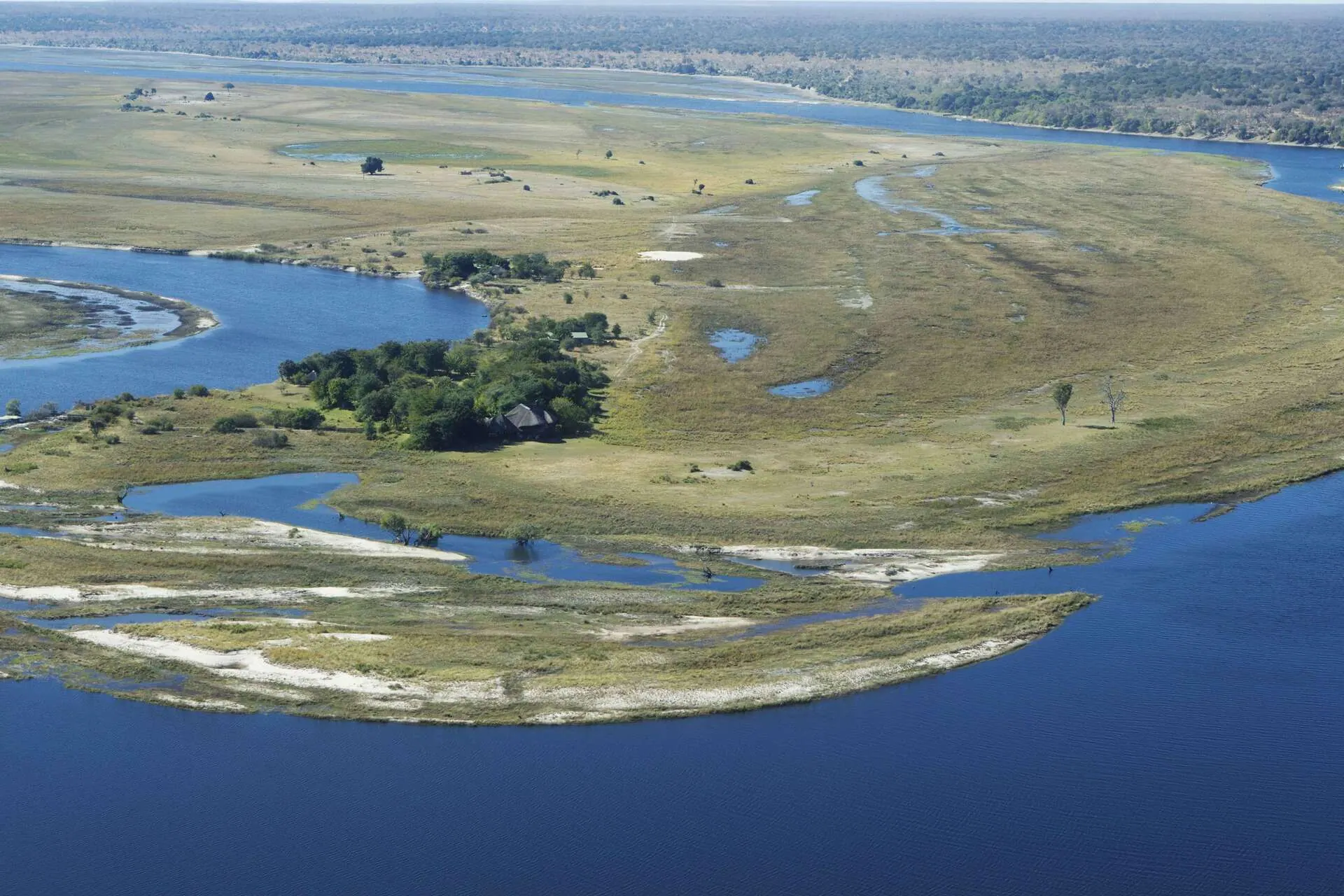
In Botswana, Botswana Tourism Organisation advises April–October as the main tourist months for weather and game viewing. The Okavango flood arrives in the local dry season — water from Angola, peaking in the dry months around June and July per UNESCO’s description, with inlet timing and distal inundation lagging by sector. Flood magnitude and timing vary by year and by part of the Delta.
Seychelles sits under a cooler southeast monsoon roughly May–September and a warmer northwest monsoon roughly November–March, with April and October transitional — useful when a Masai Mara or Kenyan-coast chapter finishes on Mahé or a sister island.
Cape Town and the Winelands versus Lowveld safari seasons often run inverted — Cape’s dry Mediterranean summer roughly November–March against a Lowveld dry-winter game window roughly May–September — yet many couples combine either way.
Soft arrival. Most long-haul arrivals into Nairobi, Kilimanjaro, Dar es Salaam, Johannesburg, or Cape Town land after overnight flights. A quiet first night in the city, on a coffee estate, or at the Cape before early bush starts keeps the opening days human.
Pacing. About three nights per camp is a practical baseline, with fewer camps and longer stays preferred. A bush-and-beach honeymoon commonly needs ten to fourteen days or more so transit does not dominate.
Privacy vocabulary. Exclusive itinerary, exclusive vehicle, and exclusive-use camp are three different things. In East Africa, a private journey often means an exclusive-use four-by-four and dedicated guide. Across much of Southern Africa, shared lodge vehicles remain the default unless an exclusive vehicle is upgraded. Ask the vehicle question early.
Classic pairings — safari core and beach or Cape
Four shapes recur for honeymoon safari travel across Africa. Each combines a safari core with a beach or Cape finish, shaped by season, gateways, and entry rules.
Northern Tanzania / Serengeti and Zanzibar
Tanzania’s tourist board places the Serengeti and Great Migration alongside Zanzibar’s beach as a core product mix; Stone Town is a UNESCO World Heritage Site. Gateways: Kilimanjaro (JRO) and Arusha (ARK) for the northern circuit; Zanzibar (ZNZ) for the island; Dar es Salaam (DAR) as coastal hub.
Auric Air markets daily direct Serengeti–Zanzibar links from Seronera (SEU) and Kogatende (KGT) — about one hour forty-five minutes — plus connections via Arusha and Dar. Frequencies and aircraft change; confirm the live timetable when booking.
One Tanzania tourist visa generally covers Mainland and Zanzibar when the first destination is selected correctly on the application — re-check Immigration guidelines before travel. CDC recommends malaria chemoprophylaxis for Tanzania in all areas under 1,800 meters, including classic safari parks and Zanzibar context; yellow-fever entry certificates are routing-dependent if arriving from a risk country. Consult a travel-medicine clinician.
Seasonal fit is strongest roughly June–October and December–February; lean less on April–May for a beach-first plan. Migration timing and river crossings vary and are never guaranteed.
Masai Mara and Kenyan coast or Seychelles
Nairobi (NBO) is the long-haul gateway; Wilson (WIL) feeds the light-aircraft circuit to Mara strips. Magical Kenya frames the Mara migration window roughly July–October as indicative. The coast — Diani, Lamu — shares the western Indian Ocean monsoon family: cooler southeast trades mid-year; hotter northeast monsoon late December into March. Variance applies.
Kenya’s entry process for most foreign visitors is an eTA via the official etakenya.go.ke portal — avoid reseller sites. CDC recommends chemoprophylaxis for Kenya in all areas under 2,500 meters, including parks and coast, with mosquito avoidance only in highly urbanized central Nairobi. Yellow-fever vaccine recommendations and entry certificates are itinerary-dependent; check official rules and a clinician.
A Seychelles finish adds Visit Seychelles climate windows, pre-arrival Electronic Border System forms, and — for many mainland-Africa routings — a yellow-fever certificate when arriving from a risk country (including certain airport transits over twelve hours), for travelers aged one and older. Kenya Airways has operated direct Nairobi–Mahé service; schedules change.
See Kenya.
Okavango / Botswana, Victoria Falls, and Mauritius or Mozambique
The Okavango Delta is a UNESCO inland delta; tourism into the inner Delta is largely air-access camps, and Botswana Tourism Organisation frames exclusive wilderness. Gateways: Maun (MUB) for the Delta; Kasane (BBK) for Chobe; Victoria Falls (VFA) and Livingstone (LVI) for the Falls. Last-mile hops are light aircraft. Victoria Falls / Mosi-oa-Tunya is a UNESCO transboundary World Heritage Site spanning Zambia and Zimbabwe — confirm entry rules for each nationality when stitching Botswana to either side of the Falls.
Seasonal fit for bush-to-beach often tracks Botswana’s dry and flood peak roughly May–September or October, with UNESCO’s dry-season flood peak around June and July and hydrology lag (inlet peak near April; distal inundation toward August–September). Green-season heat and birding from November to March is an alternate. Flood timing is never a fixed-date promise. In 2026, high water closed parts of Moremi and left Third Bridge and some airstrips affected into late May — an atypical year; re-check Department of Wildlife and National Parks and Botswana Tourism before area-specific plans.
Light-aircraft luggage limits differ by carrier — Botswana Tourism, Wilderness Air, and Mack Air publish different figures. Follow the operating carrier’s written policy; there is no single universal kilogram limit. Park and concession fees apply and are confirmed at booking. Night drives, walks, and off-road positioning are available in concessions, wildlife management areas, and other designated areas where those activities are permitted.
Mauritius and Mozambique beach finishes sit behind their own visa or eVisa rules. Mozambique’s tourist eVisa runs through evisa.gov.mz (platform refreshed February 2026 — reconfirm at planning). Mauritius’s Ministry of Health requires a yellow fever vaccination certificate from travelers over one year of age arriving from a risk country, including Kenya and Tanzania (Mauritius Ministry of Health, accessed 5 October 2026). Confirm before departure. CDC recommends malaria chemoprophylaxis for Okavango, Chobe, and Ngamiland; Mauritius reports no malaria transmission (mosquito bite prevention still matters for other arboviruses); Mozambique is prophylaxis for all areas. Clinician always.
See Botswana.
Kruger / Sabi Sand and Cape Town / Winelands
South African Tourism sample itineraries pair Cape Town, the Winelands, and a Kruger safari in one country. Gateways: Johannesburg (JNB) and Cape Town (CPT) internationally; Lowveld via Mbombela / Kruger Mpumalanga (MQP), private airstrips into reserves such as Sabi Sand, and Skukuza (SZK), served by Airlink. Cape–Lowveld air stitches are classic; frequencies and flight numbers change — confirm when booking.
Seasonal complementarity often inverts Cape summer against Lowveld dry winter. A daily conservation fee applies in Kruger National Park for the window from 1 November 2026 through 31 October 2027; see SANParks. Fees are subject to change. Public Kruger areas and private or provincial reserves — Sabi Sand, Timbavati, and others — set different rules for self-drive, off-road, night drives, and walking. Confirm each rule against the named reserve — Greater Kruger is not one shared rule set.
On malaria, CDC recommends year-round chemoprophylaxis for Kruger; South African health authorities emphasize mosquito avoidance year-round with chemoprophylaxis emphasis roughly September–May. Discuss both with a travel-medicine clinician. Cape Town and most of South Africa outside the northeastern low-altitude border districts have no known transmission. Safari areas such as Madikwe or the Eastern Cape sit outside CDC and NICD indicated transmission areas for many travelers — confirm with a clinician and the current official map.
Yellow-fever certificates for South Africa are routing-dependent when arriving from a risk country. January 2026 rains caused significant park damage with recovery work running into late 2026; confirm each named camp against live SANParks notices before travel.
See South Africa.
Optional — Rwanda gorillas beside a beach finish
Mountain gorilla tracking in Volcanoes National Park is an official Rwanda Development Board product. A beach finish via Nairobi, Johannesburg, or island hubs can be added on enquiry. The East Africa Tourist Visa covers Kenya, Uganda, and Rwanda only — Tanzania is generally separate. Gorilla permit fees are confirmed at booking.
When the pairing, privacy format, and season window are clear enough to discuss, speak with a specialist. The journey is designed before the brochure is filled.
Privacy and intimacy formats
Exclusive-use villas and houses. Sole-use safari villas — entire property, dedicated staff, often private guiding — are a distinct way to stay. Singita Serengeti House on Grumeti (four suites; staffed exclusive-use home) and Singita Castleton in Sabi Sand (exclusive-use homestead and cottages; outdoor boma dinners) show the range of sole-use villa stays.
Camp buyouts. Forest Chem Chem in Burunge Wildlife Management Area is reserved exclusively for one party, with private vehicle and guide included in its all-inclusive stay; it closes from April through end of May. Confirm seasonal openings property by property.
Island intimacy. Four Seasons Resort Seychelles publishes stand-alone villas and residences with private pools. &Beyond Mnemba Island, off northeast Zanzibar, is a private island with twelve beachside bandas. Amenities change; confirm current property detail at planning.
Private vehicle and guide. Exclusive-use inside camp does not empty a public national park of other vehicles at a sighting.
Private dining. Outdoor boma dinners and intimate candlelit dining are common formats — weather and season dependent.
Sleep-outs and star beds. Sleep-out and star-bed products exist across the region; confirm the amenity on the property’s current official page before travel.
Okavango nuance. Night drives and walks are available on concession and designated-area products where those activities are permitted.
Health and entry
Malaria. Classic East African safari and Zanzibar, Kenya’s parks and coast, Okavango and Chobe, and Kruger Lowveld generally sit in CDC chemoprophylaxis geographies. For Kruger, CDC recommends year-round chemoprophylaxis; South African DoH / NICD emphasize a September–May high-season window — discuss both with a clinician. Mauritius reports no malaria transmission; Seychelles is not listed by CDC for malaria chemoprophylaxis — dengue and Zika advisories may still apply. Madikwe and Eastern Cape reserves sit outside indicated transmission areas for many travelers — confirm with a clinician and the current official map. Chemoprophylaxis is never complete protection; mosquito avoidance remains essential.
Yellow fever. Destination vaccine advice and entry-certificate rules differ. Certificates can be required when arriving from yellow-fever-risk countries — including certain airport transits longer than twelve hours — especially when a mainland safari ends on an island or the coast (Seychelles, Tanzania, Mozambique). Check official entry rules for each country on the exact routing and confirm with a clinician. International Certificates of Vaccination or Prophylaxis follow WHO lifetime-validity rules from July 2016; still carry the certificate when a destination requires it.
Mauritius’s Ministry of Health requires a yellow fever vaccination certificate from travelers over one year of age arriving from a risk country, including Kenya and Tanzania (Mauritius Ministry of Health, accessed 5 October 2026). Confirm before departure. Separate 2026 Mauritius entry measures — All-in-One Travel Form and Health Declaration, plus temporary rules touching recent presence in the Democratic Republic of the Congo, Uganda, or South Sudan — may apply if an itinerary passes those states; they are distinct from yellow fever.
Visas, eTA, and eVisa. Tanzania Immigration eVisa (Mainland and Zanzibar when first destination is selected correctly). Kenya eTA via etakenya.go.ke. Botswana visa-exempt lists plus evisa.gov.bw. South Africa nationality-specific. Mauritius passport.govmu.org country tables. Seychelles Electronic Border System. Mozambique evisa.gov.mz. Rwanda permits separate; East Africa Tourist Visa covers Kenya, Uganda, and Rwanda only. Victoria Falls Zimbabwe or Zambia entry is separate and nationality-specific. Fees change — confirm at planning.
Seasonality by pairing (indicative)
Month ratings are indicative. Rainfall, flood, wind, and migration timing vary year to year — never guarantees.
| Pairing | Jan–Feb | Mar–May | Jun–Aug | Sep–Oct | Nov–Dec |
|---|---|---|---|---|---|
| Northern Tanzania + Zanzibar | Strong (calving + Kaskazi beach) | Weak–Mixed (long rains; some closures) | Strong (dry safari + Kusi beach) | Strong–Shoulder | Mixed–Strong (short rains / festive) |
| Masai Mara + Kenya coast | Good beach; safari green | Weak (long rains) | Strong (migration window + SE trades) | Strong early; shoulder late | Mixed (short rains / festive) |
| Masai Mara + Seychelles | Good (NW warmer) | Shoulder (Apr transition; May SE start) | Good (cooler SE) | Good (Oct transition) | Good–Busy |
| Okavango + Falls + Mauritius / Mozambique | Green / heat (alt birding) | Shoulder → building flood | Peak flood + dry | Hot late dry / receding | Early rains |
| Kruger / Sabi + Cape / Winelands | Cape summer peak; Lowveld green / wet | Shoulder | Lowveld dry peak; Cape winter wetter | Shoulder | Cape summer builds |
| Madikwe / Eastern Cape + Cape | Often chosen to simplify malaria planning against Kruger — confirm with a clinician | Same | Same | Same | Same |
For Okavango in 2026, treat high-water access disruption as atypical — re-check live park notices before locking sectors.
Sample frameworks
These frameworks show how a honeymoon pairing becomes a journey. Camps and nights are indicative; enquire to design.
East Africa safari and Zanzibar beach
Northern Tanzania or Serengeti spine, then Zanzibar. Strongest windows roughly June–October and December–February. Auric Air’s marketed Seronera or Kogatende to Zanzibar hop runs about one hour forty-five minutes — confirm the live schedule. About three or more nights per camp; ten to fourteen days or more for bush and beach. Privacy: private vehicle where it matters; optional exclusive-use. See Tanzania and Serengeti, with Zanzibar as the beach finish. Migration varies; Forest Chem Chem closes April–end May if that buyout is in view.
Masai Mara and coast or Seychelles
Greater Mara chapter plus Diani, Lamu, or Seychelles. July–October migration window is indicative. Kenya eTA; Seychelles Electronic Border System; yellow-fever certificates checked against the mainland-to-island routing. See Kenya, with Masai Mara, coast, and Seychelles as the chapters. Crossings are never guaranteed; Nairobi–Mahé schedules change.
Southern safari and Cape or island
Either Okavango — with optional Victoria Falls — plus Mauritius or Mozambique, or Kruger / Sabi Sand (or Madikwe / the Eastern Cape) plus Cape Town and the Winelands. Southern private-vehicle upgrades are often needed when exclusive vehicle matters. Mauritius requires a yellow-fever certificate for arrivals from risk countries including Kenya and Tanzania — Ministry of Health rule; confirm before departure. Okavango: fees confirmed at booking; luggage per operating carrier; night drives by area. Kruger: a daily conservation fee applies (amounts confirmed with SANParks); rules differ by named reserve. See Botswana and South Africa, with Okavango, Kruger, and Cape as the chapters. Mozambique eVisa and Falls entry are confirmed at planning; 2026 flood and camp-status notices are checked before locking sectors.
FAQ
- What is an African safari honeymoon?
- A privacy- and pacing-led private journey — typically a safari core with fewer longer stays, then a soft beach, island, or Cape finish — tailor-made rather than a fixed departure.
- When is the best time for a safari honeymoon?
- It depends on the pairing. East safari and Zanzibar are strongest roughly June–October and December–February; April–May long rains are the weakest classic overlap. Botswana’s dry and flood peak runs roughly May–September or October; flood lag means distal inundation can trail the inlet peak. Cape versus Lowveld seasons are often complementary rather than identical. All windows are indicative — rainfall, flood, and migration vary year to year. In 2026, Okavango high water was atypical — re-check live park notices before locking sectors.
- Is a honeymoon safari the same as a private vehicle?
- Not automatically. Exclusive itinerary, exclusive vehicle, and exclusive-use camp are three different things — ask which applies when planning.
- What does exclusive-use mean for couples?
- Sole-use villa or camp buyout — full property for one party, often with dedicated staff and private guiding. Exclusive-use in camp does not empty a public park of other vehicles. Named properties show the range of exclusive-use formats.
- How long should a safari and beach honeymoon be?
- About three nights per camp and ten to fourteen days or more total for bush and beach keeps transit from dominating.
- Do we need yellow fever certificates for island finishes?
- Certificate rules are routing- and destination-dependent, especially mainland Africa to island. Check official entry rules for each country on the exact itinerary and confirm with a clinician. Mauritius requires a yellow-fever certificate from travelers arriving from a risk country, including Kenya and Tanzania — per Mauritius’s Ministry of Health; confirm before departure.
- What about malaria on a honeymoon itinerary?
- Many classic safari areas sit in CDC chemoprophylaxis geographies. For Kruger, CDC recommends year-round chemoprophylaxis; South African health authorities emphasize a September–May high-season window — discuss both with a clinician. Madikwe and Eastern Cape reserves sit outside indicated transmission areas for many travelers — confirm with a clinician and the current official map. Chemoprophylaxis is never complete protection.
- Can you combine countries — or safari and beach — on one honeymoon?
- Yes: Serengeti–Zanzibar; Masai Mara–coast or Seychelles; Okavango–Falls–island; Kruger–Cape are classic shapes. East to South in one trip adds hub hops. Enquire to design the exact nights and routes. The East Africa Tourist Visa covers Kenya, Uganda, and Rwanda only; Tanzania is generally separate.
- Are there fixed honeymoon itineraries or romance rates?
- No. Journeys are enquiry-led and tailor-made. Amenities at individual properties change and are confirmed when planning. Roqueni & Co. does not list romance rates, discounts, or fixed honeymoon products.
When you are ready to shape an African safari honeymoon — safari core, privacy format, and beach or Cape finish — the next step is a specialist conversation. Investment varies with season, camps, circuitry, exclusivity choices, and length of stay.